
You’ve thought about using GPS to track your guys. But then you wonder if you’re going to get sued. Or you worry that your best lead will quit because he thinks you’re spying on him.
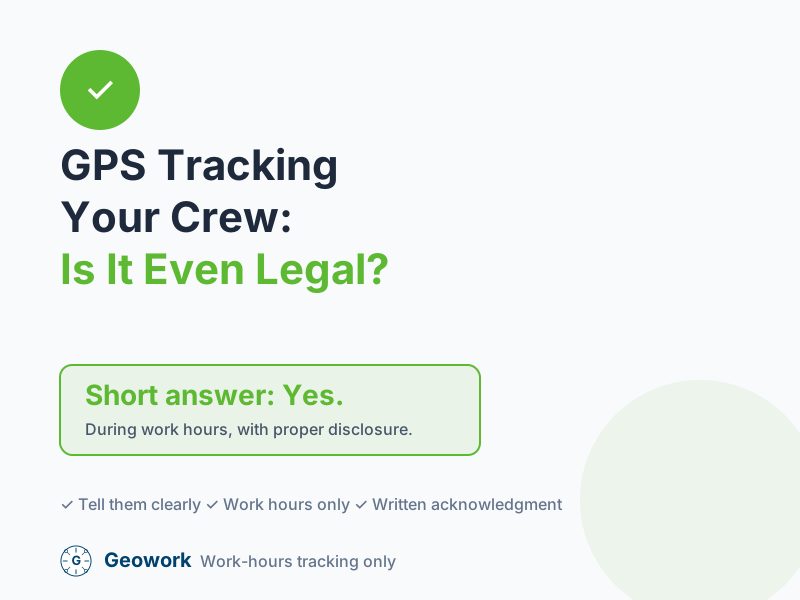
The Short Answer Is Yes
In the United States, it is perfectly legal to track your employees while they are on the clock. It is your business. Those are your trucks. You are paying for their time.
You have a legal right to know if the work you are paying for is actually happening. As long as they are working, you are allowed to know where they are.
The Legal Requirements
While tracking is legal, there are rules:
1. Disclose the Tracking
Don’t hide it. Tell your workers clearly that GPS tracking is part of the job. Secret tracking can create legal problems even when the tracking itself is legal.
2. Limit to Work Hours
Only track during work time. Tracking employees after they clock out, on weekends, or during personal time crosses the line from reasonable business practice to invasion of privacy.
3. Get Written Acknowledgment
Have employees sign a simple document stating they understand GPS tracking is used for time verification. This protects you legally and sets clear expectations.
4. Explain the Business Purpose
“We track location to verify hours for payroll accuracy” is a legitimate business purpose. This isn’t about surveillance—it’s about ensuring the work you pay for actually happens.
How to Do It Without Being a Jerk
The key is how you tell them. If you sneak it onto their phones, they will be pissed. If you sit them down and explain it, most guys will get it.
Tell them: “Look, I’m losing money on manual timesheets. I need to make sure our billing is right so we can all keep getting paid. This app only tracks you when you are on the clock at a job site.”
You aren’t tracking them when they go home. You aren’t looking at what they do on the weekend. You’re just verifying that “work time” is actually spent at the “work site.”
It’s Tuesday and a Guy Gets Accused of Something
Imagine a customer calls you. She says your guy, Dave, hit her mailbox and drove off. She’s screaming and threatening to call the police.
You check the GPS records. You see that Dave wasn’t even at her house on Tuesday. He was three towns over at a different job. You have the GPS proof to back him up.
Suddenly, the “tracking” isn’t a bad thing. It’s the thing that saved Dave’s job and saved your company from a lawsuit. When you explain it like that, your guys will actually want the app.
State-Specific Considerations
Some states have specific requirements:
| State | Requirement |
|---|---|
| California | Written notice required |
| Connecticut | Written notice required |
| Delaware | Written notice required |
| New York | Written notice required |
| Texas | Consent required for tracking personal vehicles |
Check with a local employment attorney for your state’s specific requirements.
The “Consent” Part
To stay legal, you just need to be clear. Have your guys sign a simple piece of paper saying they know the app is being used for time tracking.
Most states just want you to be honest about it. Don’t hide it. Don’t track them after hours. If you do those two things, you are in the clear.
Build a Business on Facts
Tracking isn’t about lack of trust. It’s about having the facts. When you have the facts, everyone is protected—you, your crew, and your customers.
Ready to Implement GPS Tracking the Right Way?
- See how Geowork handles privacy — Built-in protections for work-hours-only tracking
- Read our full GPS tracking laws guide — State-by-state legal overview
- Get started with a demo — See how transparent tracking works
This article provides general information only and does not constitute legal advice. Employment laws vary by state and situation. Consult a qualified employment attorney for advice specific to your business.
Track Your Crew the Right Way
Work-hours-only tracking that's transparent, legal, and fair to everyone.
Comments (0)
Be the first to leave a comment!
Leave a Comment